EU Anti-Greenwashing Rules: What Businesses Need to Know

EU anti-greenwashing rules under Directive (EU) 2024/825 now apply from 27 September 2026. Businesses making consumer-facing sustainability claims should review packaging, labels, websites, product pages, and marketing materials to ensure environmental claims are specific, appropriately substantiated, and clear about the product, component, process, or business activity they describe.
Need help strengthening product data and sustainability claim readiness? Contact SML to discuss how digital identification, item-level RFID, traceability, and Digital Product Passport solutions can support sustainability claim governance through improved product data management, traceability, and information accessibility.
EU anti-greenwashing rules under Directive (EU) 2024/825 now apply across Member States from 27 September 2026. The rules strengthen consumer protection against misleading sustainability claims, unreliable sustainability labels, offset-based product claims, and unclear information on durability and repairability. Businesses should review customer-facing claims used on packaging, websites, product pages, labels, and marketing materials.
What changed under the EU anti-greenwashing rules?
The EU anti-greenwashing rules introduce stricter requirements for the use of sustainability claims and related environmental communications.
Directive (EU) 2024/825, known as the Empowering Consumers for the Green Transition Directive, was adopted on 28 February 2024 and entered into force on 26 March 2024. EU Member States were required to transpose it by 27 March 2026, and the new requirements have applied from 27 September 2026, according to the European Commission guidance on empowering consumers for the green transition and Directive (EU) 2024/825 on EUR-Lex.
The Directive does not create a completely standalone green claims law. It amends two existing EU consumer protection laws:
- Unfair Commercial Practices Directive — Directive 2005/29/EC
- Consumer Rights Directive — Directive 2011/83/EU
The practical effect is significant. Environmental claims, sustainability labels, product durability statements, repairability information, and certain carbon-related claims now sit under a stricter consumer protection framework.
The rules apply to business-to-consumer commercial communications.
That includes sustainability claims made on:
- Product packaging
- Product labels
- E-commerce product pages
- Retail websites
- Social media marketing
- In-store displays
- Advertising campaigns
- Customer-facing product information
Compliance with the ECGT Directive may require coordination across legal, sustainability, marketing, product, and data management functions.
Are sustainability claims banned in the EU?
Sustainability claims are not banned in the EU, but they must be specific, reliable, and adequately substantiated.
| Risk area | What businesses should check |
|---|---|
| Generic claims | Is the claim specific and explained on the same medium? |
| Whole-product claims | Does the claim apply to the full product or only one component? |
| Carbon claims | Is the claim based only on offsetting? |
| Legal compliance claims | Is the claim presented as a special benefit when it is mandatory? |
| Sustainability labels | Is the label based on a certification scheme or public authority? |
The new rules target claims that are likely to mislead consumers because they are vague, too broad, unsupported, or presented without proper context. A company can still make an environmental claim, but the claim should clearly explain the environmental benefit and identify the product, component, process, or business activity to which the claim relates.
As a practical good practice approach, businesses may consider the following questions:
- What is the exact environmental benefit?
- Which part of the product or business does it apply to?
- What evidence supports the claim?
For example, “eco-friendly garment” is a high-risk claim unless the trader can demonstrate recognised excellent environmental performance relevant to that broad statement.
A more specific claim may be easier to substantiate, such as: “This woven label contains recycled polyester.” Even then, the business should hold evidence supporting the material claim, the percentage claimed, and the chain of information behind it.
The new EU rules do not prohibit environmental communication. They require environmental communication to be clearer, narrower, and better supported.
Which environmental claims create the highest greenwashing risk?
Generic environmental claims may create greenwashing risk where they are not clearly explained, appropriately substantiated, or supported by recognized excellent environmental performance.
Directive (EU) 2024/825 identifies generic environmental claims as a concern where the claim is not specified in clear and prominent terms on the same medium. EUR-Lex examples include terms such as “environmentally friendly,” “eco-friendly,” “green,” “nature’s friend,” “ecological,” “climate friendly,” “carbon friendly,” “energy efficient,” “biodegradable,” and “biobased.”
High-risk generic environmental claims
Businesses should review use of terms such as:
- Green
- Eco-friendly
- Environmentally friendly
- Sustainable
- Climate friendly
- Carbon friendly
- Nature friendly
- Biodegradable
- Biobased
- Conscious
- Planet positive
- Better for the planet
These terms may be especially risky when they suggest a broad environmental benefit but do not explain what the benefit is, what evidence supports it, or which part of the product is being described.
What are the new rules for sustainability labels?
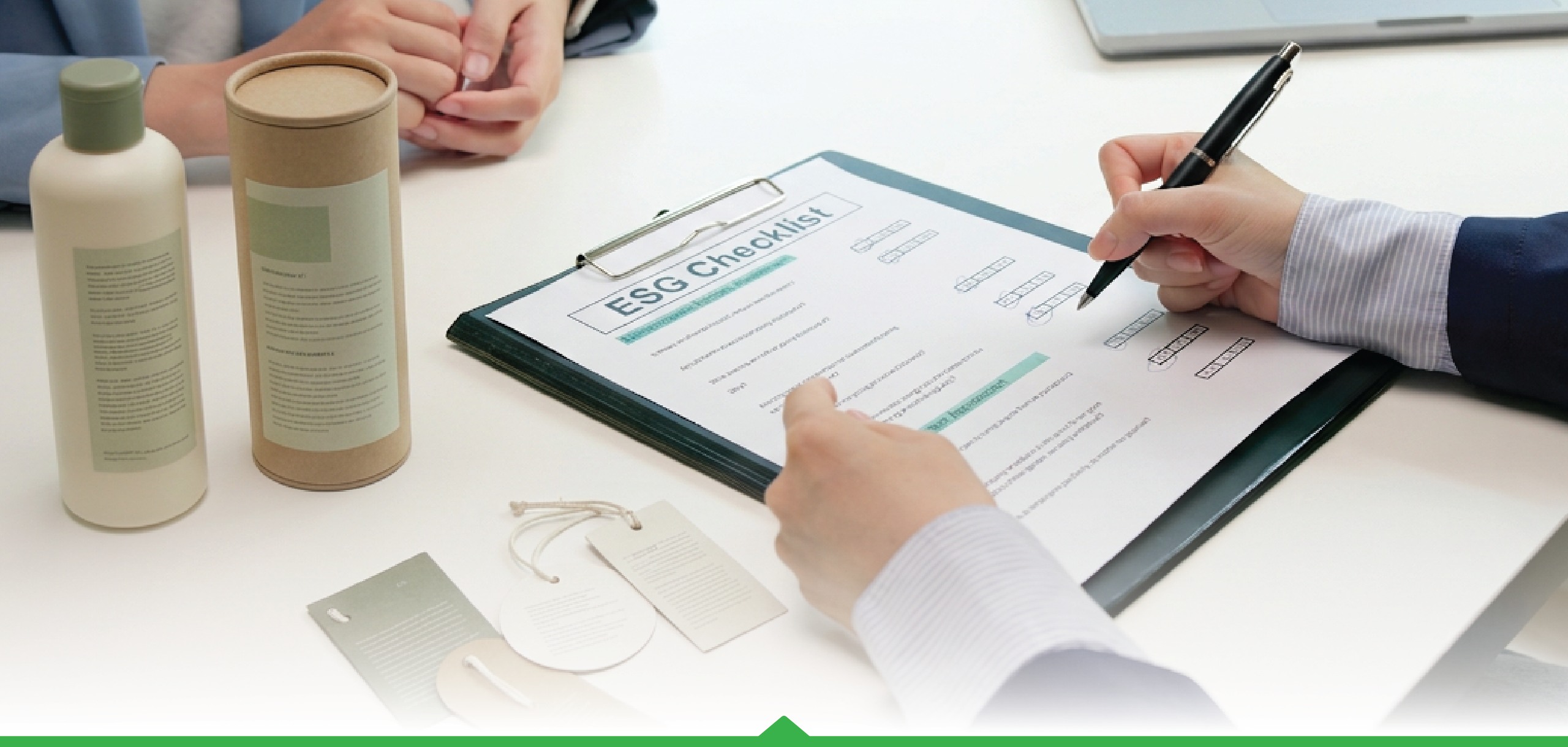
A sustainability label must be credible, transparent, and based on a certification scheme or established by public authorities.
Under the amended rules, displaying a sustainability label that is not based on a certification scheme or established by public authorities is prohibited. The European Commission FAQ explains that a certification scheme should involve independent third-party verification, publicly available requirements, transparent governance, and monitoring of compliance against defined requirements.
This is particularly relevant where environmental or sustainability-related labels, symbols, or markings are used in customer-facing communications.
A self-created label may look harmless. Under the new EU anti-greenwashing rules, it may create legal risk if it suggests an environmental or social benefit without the required credibility structure.
What should a credible sustainability label include?
A credible sustainability label should generally involve:
- Independent third-party verification
- Publicly available criteria
- Transparent governance
- Objective monitoring of compliance
- Clear rules on who may use the label
- Evidence that the product, process, or business meets the label requirements
Recognised schemes such as the EU Ecolabel and national or regional EN ISO 14024 Type I ecolabelling schemes officially recognized in EU Member States may be relevant reference points, depending on the product category and claim.
Sustainability labels should be supported by an appropriate certification scheme or established by a public authority where required under the Directive.

Why can whole-product claims be problematic?
Consumers may interpret a sustainability claim as applying to an entire product, even where the supporting evidence relates only to a specific component, material, process, or feature.
To avoid creating a misleading overall impression, businesses should communicate sustainability benefits in a way that accurately reflects what has been assessed and substantiated.
The issue is scope. Consumers should be able to understand whether the benefit applies to:
- The full product
- One material
- One component
- The packaging
- The manufacturing process
- The product’s use phase
- The product’s end-of-life pathway
A claim about one component should not be written as a claim about the whole product.
Aligning the scope of the claim with the supporting evidence can help improve transparency and reduce the risk of consumer misunderstanding.
How do the rules affect carbon neutral and offset-based claims?
The EU anti-greenwashing rules place greater scrutiny on claims that a product has a neutral, reduced, or positive environmental impact based solely on greenhouse gas offsetting.
Directive (EU) 2024/825 adds new restrictions for claims where improved environmental performance appears to come only from offsets outside the product’s value chain rather than actual emissions reductions.
Examples of higher-risk claims include:
- “Climate neutral”
- “Climate compensated”
- “Carbon positive”
- “Climate net zero”
These claims may require careful substantiation where the product claim depends solely on purchased carbon credits.
The direction of travel is clear: product-level climate claims need to focus on actual emissions reductions, not only offsetting.
Businesses should review whether carbon-related claims are:
- Product-level or company-level
- Based on actual emissions reductions
- Based partly or solely on offsets
- Clear about the boundary of the claim
- Supported by credible emissions data
- Consistent with customer-facing wording
Can legal compliance be marketed as a sustainability benefit?
Legal compliance should not be presented as a distinctive sustainability benefit where it reflects requirements that businesses are already obliged to meet under applicable legislation.
The risk arises when mandatory requirements are communicated in a way that may lead consumers to perceive them as a unique environmental or sustainability advantage. Meeting legal requirements is an expected baseline, whereas sustainability performance generally relates to actions, attributes, or improvements that go beyond regulatory obligations.
Companies should distinguish between:
- Required legal compliance
- Voluntary certifications
- Product-specific environmental improvements
- Measurable reductions in environmental impact
- Optional design choices that exceed legal baselines
Clear communication helps consumers understand whether a claim reflects regulatory compliance or sustainability performance beyond legal obligations.
How do the rules address durability and repairability?
The ECGT Directive also targets misleading practices related to product durability, repairability, software updates, and early obsolescence.
The European Commission explains that Directive (EU) 2024/825 strengthens consumer protection against greenwashing and early obsolescence practices while improving information on product durability and reparability.
This means the Directive is broader than environmental claims alone. It also addresses claims and omissions that influence how consumers understand a product’s expected lifespan and performance.
Businesses should review communications that:
- Hide the negative impact of software updates
- Make false durability claims
- Fail to inform consumers about software updates that negatively affect product functionality or performance
- Make unsupported or misleading durability claims
- Mislead consumers about third-party accessories or consumables
- Omit relevant information about durability or repairability
For industries such as apparel, footwear, electronics, home goods, beauty, and packaging, this reinforces a broader shift toward more transparent and reliable product information.
What should businesses review now?
Businesses should review every customer-facing sustainability claim against the evidence, scope, wording, and presentation of the claim.
A practical review should include packaging, labels, websites, online marketplaces, product pages, catalogues, retailer materials, paid advertising, sales decks, and social media content.
EU anti-greenwashing readiness checklist
| Review area | Action |
|---|---|
| Claim inventory | Create a list of all environmental and sustainability claims used in customer-facing content. |
| Claim scope | Identify whether each claim applies to the product, packaging, component, process, business, or brand. |
| Evidence file | Link each claim to supporting documentation, certifications, test data, supplier records, or product data. |
| Generic wording | Replace broad terms such as “green” or “eco-friendly” with specific, substantiated wording. |
| Sustainability labels | Confirm whether each label is based on a certification scheme or established by public authorities. |
| Carbon claims | Review broad environmental claims and ensure they are appropriately substantiated or clearly specified where required. |
| Legal baseline | Remove wording that presents mandatory compliance as a unique sustainability benefit. |
| Durability and repairability | Check whether lifespan, repairability, update, and replacement claims are accurate and supported. |
| Governance | Assign review ownership across legal, sustainability, marketing, product, and packaging teams. |
| Product data | Strengthen product-level information systems so claims can be supported consistently. |
Sustainability claims are generally easier to substantiate when they are clear, specific, and supported by appropriate evidence.
How can product data and traceability support claims compliance?
Product data and traceability can help businesses substantiate sustainability claims with more consistent evidence.
Many environmental claims depend on information held across suppliers, product teams, packaging teams, sustainability teams, and marketing teams. That creates a practical challenge. A claim may be written by marketing, but the proof may sit in material specifications, supplier declarations, certification records, product lifecycle data, or packaging documentation.
Structured product data can support:
- Material composition claims
- Recycled-content claims
- Product identification
- Supplier and origin records
- Certification tracking
- Durability and repairability information
- Packaging and labelling governance
- Digital Product Passport readiness where relevant
As sustainability claims become more data-driven, businesses may need stronger processes to manage, verify, and maintain supporting information.
For businesses managing large product ranges, item-level identification, traceability and circularity solutions, and connected product information can make claim governance more reliable and easier to audit.
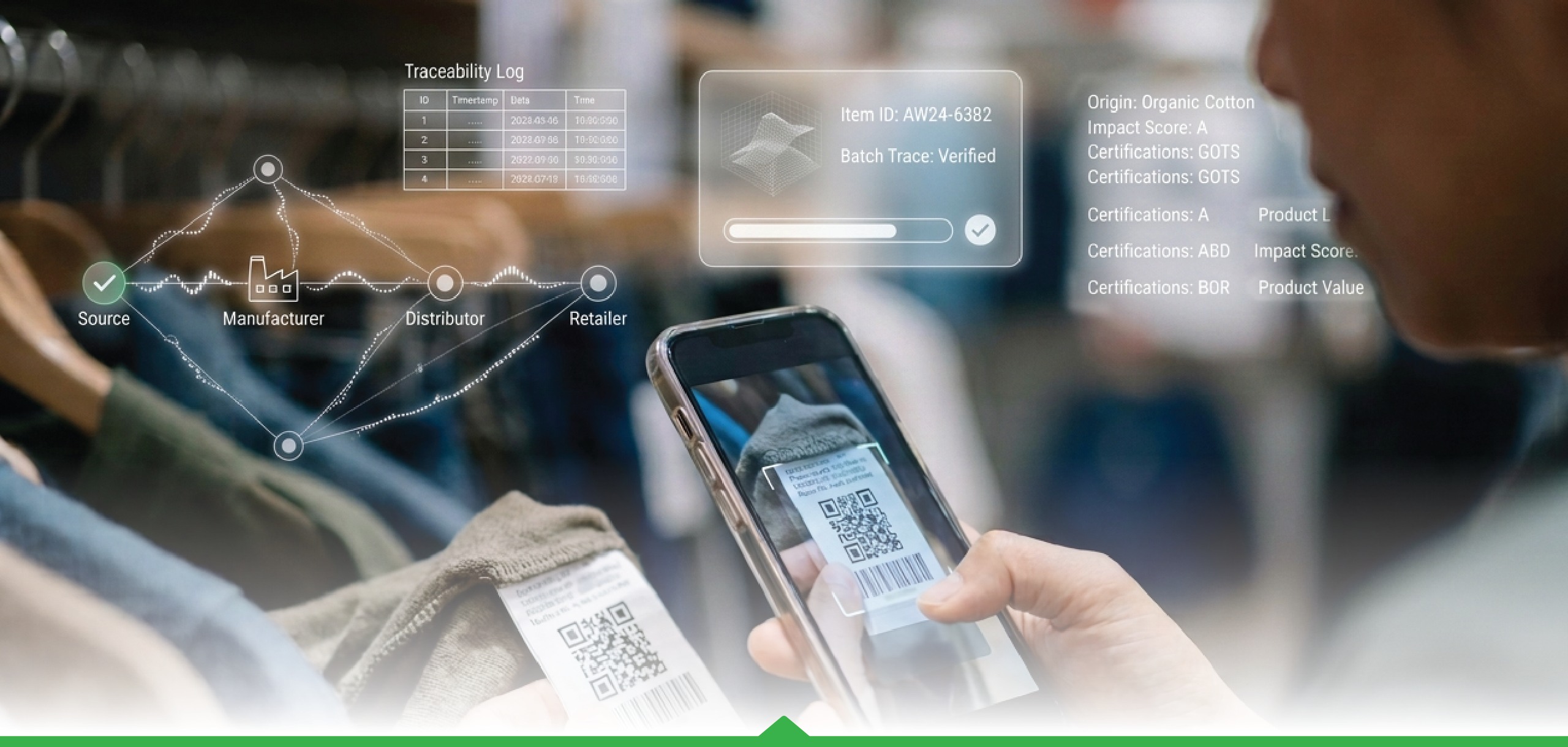
SML can support these efforts through:
- Item-level RFID solutions that enhance product identification, traceability, and data capture.
- SML Digital Product Passport solutions that help brands manage, connect, and share product information.
- Traceability and circularity solutions that support transparency, circularity, and evolving compliance expectations.
Key takeaways:
- EU anti-greenwashing rules apply from 27 September 2026.
- Directive (EU) 2024/825 amends existing EU consumer protection laws rather than creating a standalone claims regime.
- Generic environmental claims are higher-risk unless they are specific, clear, and supported.
- Sustainability labels need credible certification or public authority backing.
- Product-level carbon neutrality claims based solely on offsets face greater scrutiny.
- Legal compliance should not be marketed as a distinctive sustainability benefit.
- Durability, repairability, and early obsolescence are part of the same compliance shift.
- Product data and traceability are becoming central to credible sustainability communication.
This article provides a general overview and reflects our understanding at the time of publication. For specific legal, regulatory, or compliance decisions, please refer to the relevant official sources.
Frequently Asked Questions
What are the EU anti-greenwashing rules?
The EU anti-greenwashing rules refer to new consumer protection requirements under Directive (EU) 2024/825. They restrict misleading environmental claims, unreliable sustainability labels, offset-based product impact claims, and certain practices linked to durability, repairability, and early obsolescence.
When do the EU anti-greenwashing rules apply?
Directive (EU) 2024/825 entered into force on 26 March 2024. Member States were required to transpose it by 27 March 2026, and the new requirements have applied from 27 September 2026, according to the European Commission.
Are generic claims like “eco-friendly” banned?
Generic claims such as “eco-friendly,” “green,” or “environmentally friendly” are high-risk when they are not clearly explained or supported by recognised excellent environmental performance. Businesses should replace broad wording with specific claims that identify the exact environmental benefit and supporting evidence.
Can businesses still use sustainability labels?
Businesses can still use sustainability labels where they meet the new credibility requirements. Labels should be based on a certification scheme or established by public authorities, with transparent criteria, independent verification, and compliance monitoring.
Are carbon neutral product claims allowed?
Product claims such as “carbon neutral” or “climate neutral” face greater scrutiny when they are based solely on greenhouse gas offsetting. Businesses should focus on actual emissions reductions, clear claim boundaries, and credible evidence before making product-level climate claims.
Does the ECGT Directive apply to B2B communications?
The ECGT Directive primarily applies to B2C commercial practices, as it amends EU consumer protection legislation. While its requirements are directed at consumer-facing communications and claims, businesses should also consider potential contractual, reputational, and other legal risks when making sustainability-related claims in B2B communications.
Is the ECGT Directive the same as the Green Claims Directive?
No. Directive (EU) 2024/825 (the ECGT Directive) applies from 27 September 2026 and strengthens existing EU consumer protection rules. The proposed Green Claims Directive is a separate initiative that was intended to establish more detailed requirements for the substantiation and verification of explicit environmental claims.
What should companies do first?
Companies should first create an inventory of customer-facing sustainability claims. Each claim should then be mapped to its evidence, scope, product component, communication channel, and responsible internal owner.
Read more editions of SML Sustainability Insights.